Sunday May 7, 2017. Stoker and I had just moved into our Malaucène rental house for the next month. We were doing our first tandem ride and were excited but uncertain about how such a long stay in a Provencal village was going to work out. If you’ve been reading you know the answer to that one…
It turned out that was election day in France. There were people everywhere and we had to navigate the tandem around far more cars and pedestrians than usual. There were French flags flying in the gentle mini mistral. Every village we rode into was swarming with people headed for the Mairie (city hall) to cast their ballots. Because that is how they do it in France. In person. On election day.
French voters use the same system that’s been used for generations: paper ballots that are cast in person and counted by hand. Despite periodic calls for more flexibility or modernization, France doesn’t do mail-in voting, early voting or use voting machines en masse like the United States.
In much of the United States you do not need an ID to cast a ballot. Combine this with same day voter registration and you are asking for trouble. The French will not put up with that: you must show 2 ID’s to vote. One is a citizen’s ID card and the other is a kind of registered voter card. This comes from my tour guide/friend Gerry, who took the time and trouble (lots of both) to turn his permanent resident status into French citizenship so he can participate in the voting process. Here is how the French do it:

Voters make their choices in a booth, with the curtains closed, then place their ballot in an envelope that is then put into a transparent ballot box. They must show photo identification and sign a document, next to their name, to complete the process.
I like the idea of the transparent box. Why trust the election officials? If they are going to stuff ballots they will be in plain sight.
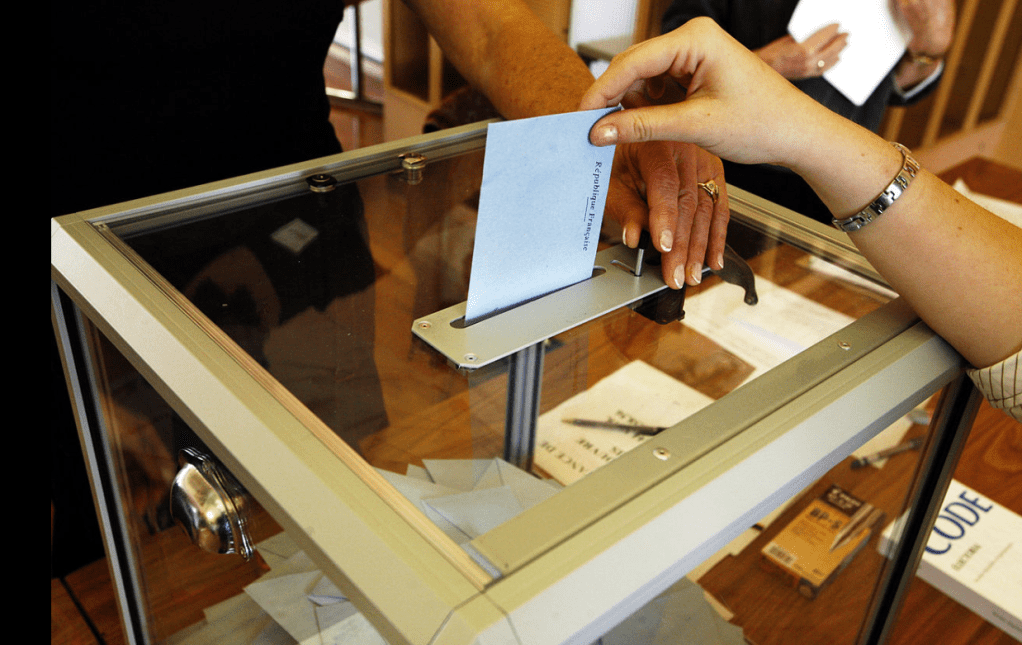
Mail in voting was banned in France in 1975 (!) because of fears of potential fraud. Imagine that. If you raise any questions about the practice in the United States you are labeled a denier. In California ballots are mailed to every ‘active’ registered voter, though the accuracy of the voter rolls is uncertain at best.
There is more:
Machine-voting was allowed as an experiment starting in 2002, but the purchase of new machines has been frozen since 2008 due to security concerns. Only a few dozen towns still use them.
Anybody ever had a computer freeze, lose data or crash? Or get hacked? Apparently the French are concerned enough that they will stick with the paper version for their elections, saying ‘merci, non‘ to the machines.
Absentee ballots don’t exist, but it is possible to authorize another person to cast your ballot on election day if you are unable to do so. To make this happen, you have to fill out a form in advance and take it to the police station, in person, and showing appropriate identification of course. And the proxy voter may only cast one such ballot for a single other person. No ballot harvesting allowed.
There are lots of things I love about France: the cafés and brasseries, the bakeries and the cheese and the wine. And the best cycling roads I’ve ever pedaled on. Count me a fan of the way they handle their elections too.


As you know, I had a proxy for the 2nd round of the Legislative elections a last month. That was, I have to say, a pain. But because this election was so important, I went to the ‘Hotel de Police’ and got my friend registered to vote for me.
As for machines, France is not a small country (68 million), and they still manage to get enough votes counted to announce the winner at exactly 8pm on election day. The system ain’t broken so we haven’t fixed it…yet.
LikeLike