A high quality road bike that is well maintained should be nearly silent. You might hear a swishing sound of tires on smooth pavement, and a kind of ‘whrrr’ as the clean and well lubricated chain rotates and meshes with the chainrings and cassettes. Shifts are smooth and precise with no irritating rattling or chain rub. And while there may be a few clicks and vibrations on exceptionally rough roads (Chile Camp/Campo Seco anyone?) those noises disappear on roads that do not resemble goat paths.
Sometimes riding in close quarters on flat ground with my friends I marvel at how little noise our machines are making. We all ride pretty high end bikes and since most of us are retired we have plenty of time to keep things clean and lubricated and properly adjusted. A few people don’t lube the chain quite often enough, and the slight squeak bothers me even if they don’t seem to notice it. But it doesn’t happen often.
My bikes all have 25,000 miles or more (some much more) of wear and tear, and they are all silent. So you might think that a new, high end bike would be completely noise free. But things are not always so simple.
My friend Kent just bought such a brand new, high end machine. He already had a very decent but older Orbea, and a really magnificent high end Trek Domane. So he didn’t need another bike, but he decided to follow Rule 12 from The Velominati.
Rule 12: // The correct number of bikes to own is n+1.While the minimum number of bikes one should own is three, the correct number is n+1, where n is the number of bikes currently owned. This equation may also be re-written as s-1, where s is the number of bikes owned that would result in separation from your partner.
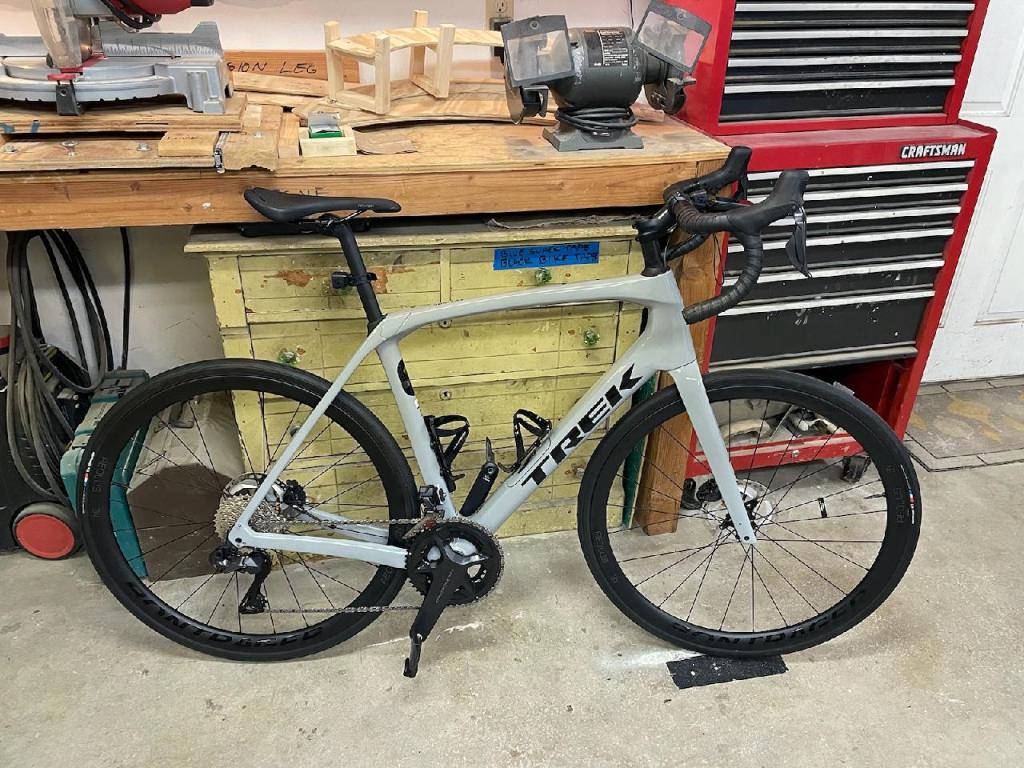
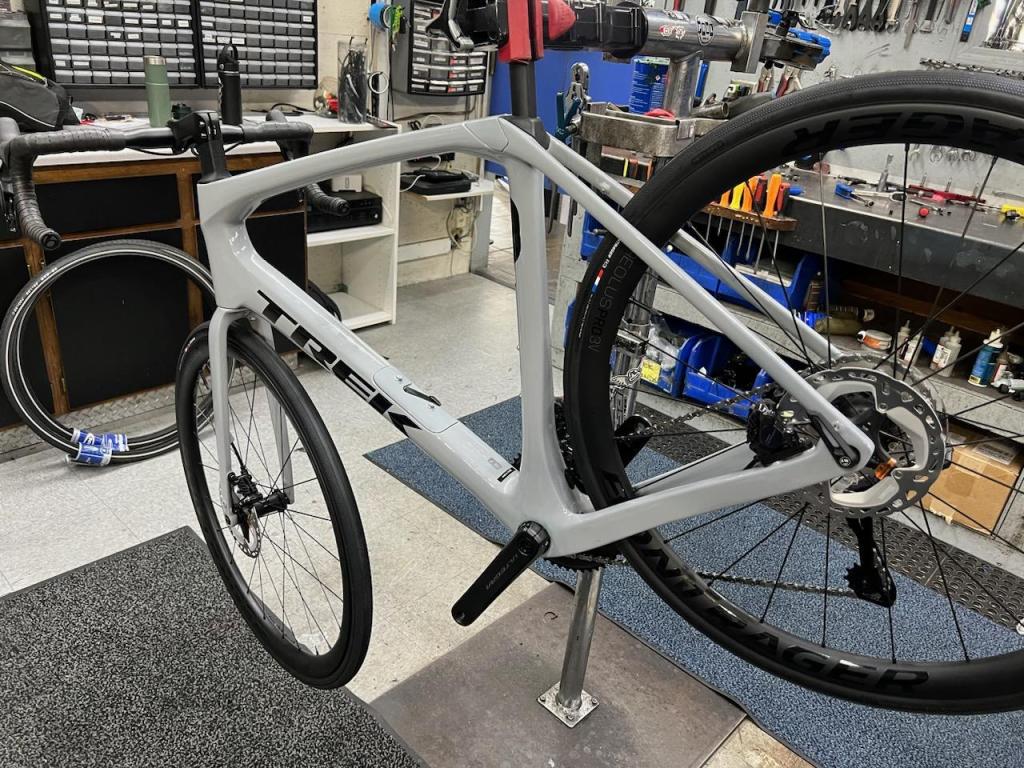
Kent got this beauty built up and fitted to match his current model. There was a little problem with that. His back got really sore and strained after his first ride. It turned out that the handlebar was 1 centimeter off center, which is a huge amount and I am kind of shocked that no one noticed until Bob, a friend and master of almost everything about bicycle mechanics, found it and corrected it.
After about 200 miles on this new bike, it started to make an irritating noise, kind of a cross between a squeak and a clunk and a click. It was coming from somewhere around the saddle and seat post area. So Kent started the detective process to discover the issue and get it fixed.
First step: check the seat post clamp bolt. The torque spec was 16 nm or less, which is pretty tight. The bolt was well below 16, so Kent set his torque wrench to 15 and tightened it down. The noise persisted.
Next suspect, the new saddle. Kent put an old worn out saddle on the new bike, and the noise persisted. But this was an imperfect test, since the old saddle had also been making some noise when he retired it. So he brought the bike to my house and installed a brand new Fizik Aliente that I have laying around, and as he rode away on my driveway to do a Brumby Road test ride, it was pretty clear that the saddle wasn’t the problem.
Or was it? Kent took the bike back to the shop where he purchased it, and they removed the seat post and re-greased everything. But when the mechanic did a test ride there was still some noise, and he says the saddle was flexing too much on the rails for a brand new one. Saddles do eventually wear out, and start to creak where the rails attach to the saddle body, but not for many thousands of miles. The mechanic is sending the saddle back for a warranty replacement.
If you are a little confused at this point, let me recap. It appears there are two issues: the seat post creaks, and the new saddle is flexing and making noise as well. The sound on Sunday’s ride was pretty loud, so maybe there were two sources.
A noisy brand new bike is really frustrating, especially after paying thousands of dollars for it. The shop is doing all they can and the problem will get fixed eventually. But let me get on my soap box for a bit and rant about over-engineering. The reason the seat post is creaking it that there is some kind of shock absorbing material in it that is supposed to contribute to a smoother, more comfortable ride. But that post/elastomer/frame interface is a potential source of sound. And it really is not necessary. Slightly wider tires at slightly lower pressure will do more to affect ride quality than any shock absorbing seat post.
I had a similar issue with the bottom bracket on my beloved Tarmac. It squeaked. Mechanics greased the bearings, replaced the bearings, replaced them again with a different type of bearing, and nothing worked. The problem was with the pressed in design, and the solution was a completely different type of bottom bracket that held the crank and bearings much more securely and eliminated the noise. The original design was lighter but the noise drove riders crazy, and there are a lot of Tarmacs out there running Wheels Manufacturing aftermarket threaded bottom brackets. Including mine, which is now wonderfully silent even when I put my maximum power into the pedals. A pro might still make it creak but I’m not doing 1,000+ watts in a sprint.
I hope Kent’s bike gets quiet soon. It is a beautiful bike with high end components, and it deserves to get noticed for that and not for its noise level
 Rich Freggiaro Cycling Blog
As usual, Another good blog!! We’ll done…
Bill Leach
President
Flip Office Furnishings, A Division of Quality Office Liquidations, Inc.
713 W Luce Ste B Box A-8 Stockton, CA 95203
Office: (209) 464-4388 | Fax: (209) 464-4422 | Cell: (415)716-0777
Hours: Monday – Friday, 8:00 AM – 4:00 PM PST
http://www.Flip-Office.comhttp://www.flip-office.com/
Flip Office Furnishings, A Division of Quality Office Liquidations, Inc.
For all your office furniture needs, Flip Office Furnishings can help!
We are committed to helping our customers engage in sustainable practice’s by offering high quality, refur
LikeLike